


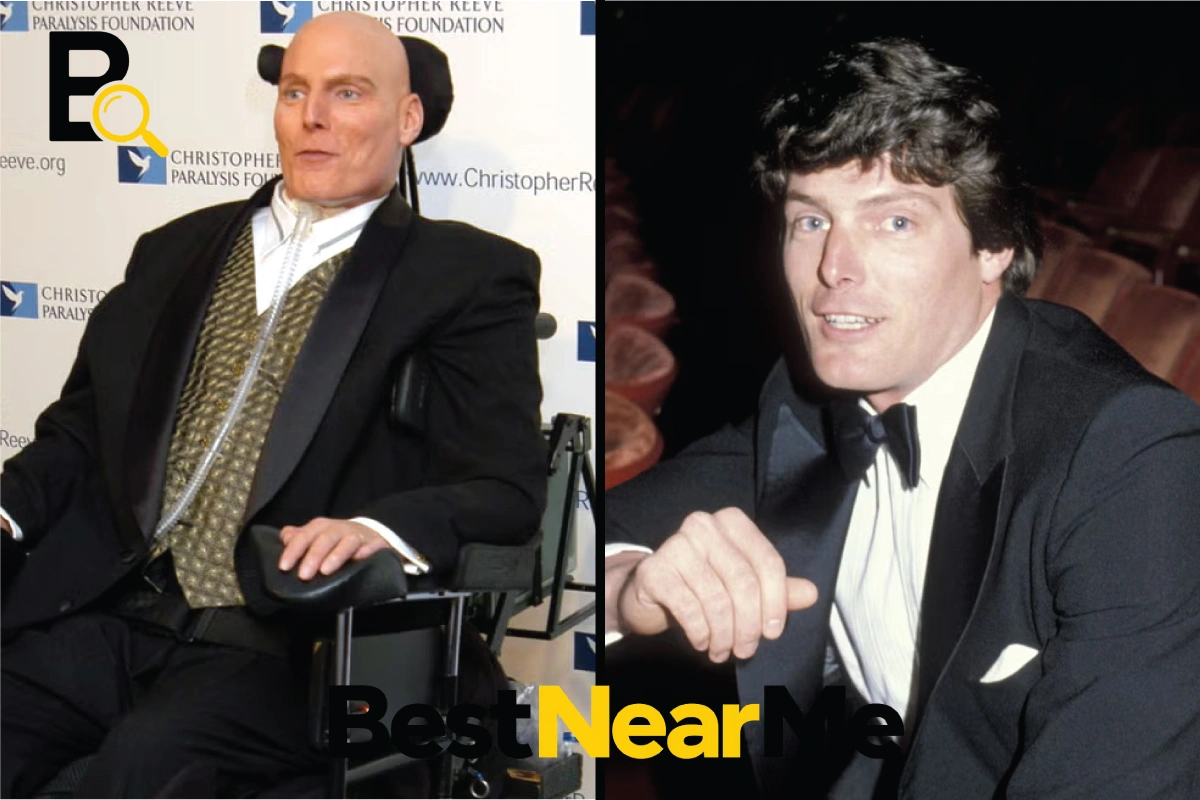
The Christopher Reeve accident was one of the most devastating moments in the life of the celebrated actor, director, and disability rights advocate. On 27 May 1995, Reeve was competing in an equestrian event in Culpeper, Virginia, when his horse stopped unexpectedly before a jump. Reeve was thrown forward and landed head first, suffering a severe spinal cord injury that left him paralysed from the neck down. He was only 42 years old, and the accident suddenly transformed the life of a man who had become internationally famous for playing Superman.
Before the accident, Reeve was known primarily for his acting career, particularly his portrayal of Superman in the 1978 film and its sequels. After the Christopher Reeve accident, however, his public identity changed dramatically. He became a prominent advocate for spinal cord injury research, accessibility, disability rights and medical innovation. His journey was not simply about recovering from a catastrophic injury. It was about rebuilding a life around new circumstances while continuing to work, raise awareness and inspire millions of people. His story remains powerful because it demonstrates how quickly life can change and how courage can take an entirely different form.
The Christopher Reeve Accident
The Christopher Reeve accident happened during a horse riding competition at the Commonwealth Park Equestrian Center in Culpeper, Virginia. Reeve was an experienced rider and had developed a serious passion for equestrian sports. On that particular day, he was riding a horse named Eastern Express, often called Buck. The competition involved jumping obstacles, something Reeve had done many times before. There was nothing about the event that suggested it would become the defining tragedy of his life.
As Reeve approached a fence, his horse suddenly stopped instead of jumping. The unexpected movement caused Reeve to be thrown from the saddle. He landed on his head, and the force of the impact severely damaged his cervical spinal cord. The injury left him unable to move his arms and legs and unable to breathe independently without assistance. Emergency responders transported him to hospital, where doctors worked to stabilise his condition. The severity of the injury meant that his life changed almost instantly. One moment he was an accomplished actor and competitive rider; the next, he was facing permanent paralysis and an entirely different future.
The seriousness of the Christopher Reeve accident became clear as doctors assessed the damage to his spine. Reeve had sustained a fracture between the first and second cervical vertebrae, resulting in catastrophic damage to his spinal cord. Such an injury can affect movement, sensation and the body’s ability to control essential functions. Reeve later described the emotional shock of waking up and understanding the extent of what had happened. His situation was not simply a physical challenge. He also had to confront fear, uncertainty and the possibility that the independence he had always known might never return.
What Happened After The Crash
Following the Christopher Reeve accident, Reeve spent considerable time in hospital undergoing treatment and rehabilitation. He required extensive medical support because his injury affected his ability to breathe without mechanical assistance. His family faced difficult decisions, and Reeve himself had to come to terms with a radically altered existence. The actor who had once performed physically demanding roles now depended on medical equipment and assistance for many everyday activities.
Yet his response gradually moved beyond survival. Reeve began exploring rehabilitation, experimental treatments and scientific research with remarkable determination. He became increasingly interested in the possibility that advances in neuroscience and regenerative medicine could eventually improve the lives of people with spinal cord injuries. Rather than allowing his injury to become the final chapter of his story, he used his public profile to draw attention to an area of medicine that received far less public awareness than it does today.
The psychological impact was also enormous. Reeve openly discussed the despair he experienced after the accident, including moments when he questioned whether he wanted to continue living. His family, friends and professional support network played an important role in helping him move forward. Over time, he developed a new sense of purpose. His experience became a bridge between his personal struggle and a wider campaign for people living with disabilities.
Christopher Reeve Accident Facts
| Detail | Information |
|---|---|
| Full name | Christopher D’Olier Reeve |
| Birth date | 25 September 1952 |
| Age at accident | 42 years |
| Accident date | 27 May 1995 |
| Age at death | 52 years |
| Accident location | Culpeper, Virginia, United States |
| Type of accident | Equestrian riding accident |
| Horse | Eastern Express, commonly known as Buck |
| What happened | The horse stopped unexpectedly before a jump and Reeve was thrown |
| Main injury | Severe cervical spinal cord injury |
| Level of injury | Between the first and second cervical vertebrae |
| Result | Paralysis from the neck down |
| Breathing support | Required mechanical assistance |
| Famous role before accident | Superman |
| First Superman film | Superman (1978) |
| Major post accident focus | Disability advocacy and spinal cord research |
| Foundation | Christopher Reeve Foundation |
| Wife | Dana Reeve |
| Children | Matthew Reeve, Alexandra Reeve Givens and Will Reeve |
| Profession | Actor, director, writer and activist |
| Death | 10 October 2004 |
| Cause of death | Heart failure following an infection |
| Legacy | Disability advocacy, spinal cord research and public awareness |
The facts surrounding the Christopher Reeve accident help explain why the event had such a profound impact on popular culture. Reeve was not an unknown person suddenly dealing with a private tragedy. He was globally recognised as Superman, a fictional character associated with extraordinary physical strength. That contrast made his real life circumstances particularly striking. The man who had portrayed someone capable of flying across the world was suddenly unable to move his own body below the neck. The symbolism was powerful, but Reeve’s real struggle was far more complicated than the Superman image suggested.
His accident also changed public conversations about disability. Reeve did not present disability as a simple inspirational story in which determination automatically overcomes every obstacle. He spoke about medical realities, accessibility, dependence, depression, scientific research and the importance of practical support. That honesty gave his advocacy greater credibility. He understood that optimism alone could not repair a spinal cord injury. Research, medical care, technology, funding and social change were also necessary.
His Life After Paralysis
After the Christopher Reeve accident, Reeve gradually returned to professional life. He continued acting and directing, although his work necessarily changed. He appeared in television programmes and films, participated in interviews and became a familiar public advocate for people with disabilities. Also directed the 1997 television film In the Gloaming, demonstrating that his creative ambitions had not disappeared with his physical abilities.
Reeve’s determination was particularly visible in his approach to rehabilitation. He worked extensively with therapists and explored treatments designed to improve his physical function. Although he never regained the level of mobility he had before the accident, he continued to believe in the potential of scientific progress. His advocacy helped increase public attention towards spinal cord injury research and encouraged discussion about emerging approaches to neurological medicine.
His relationship with his wife, Dana, was another important part of his post accident life. Dana remained closely involved in his care and advocacy work. Together, they became a powerful public symbol of partnership during extraordinary circumstances. Reeve often credited his family with helping him find reasons to keep moving forward when the emotional burden became overwhelming.
Christopher Reeve And Disability Advocacy
The Christopher Reeve accident transformed Reeve from a famous actor into one of the most recognisable disability advocates of his generation. He used interviews, public appearances and speeches to challenge assumptions about paralysis. Instead of disappearing from public life, he stepped further into it. He argued that people with disabilities deserved greater independence, better medical research and improved access to education, employment and public spaces.
Reeve also became deeply involved in fundraising for spinal cord research. Through the Christopher Reeve Foundation and related initiatives, his name became closely associated with efforts to improve treatment options for paralysis. His advocacy helped bring spinal cord injury into mainstream conversations. At a time when many people knew very little about paralysis beyond its physical consequences, Reeve encouraged the public to think about the neurological, emotional and social dimensions as well.
His work also challenged the idea that disability meant the end of ambition. Reeve continued writing, directing, speaking and campaigning. His physical limitations were significant, but they did not erase his identity as an artist, husband, father or public figure. That distinction became central to his legacy.
His Superman Legacy
Christopher Reeve’s portrayal of Superman remained an important part of his identity long after the Christopher Reeve accident. His performance in the 1978 film helped establish an enduring version of the character that remains influential decades later. Reeve brought warmth, humour and vulnerability to Clark Kent while giving Superman the physical presence audiences expected from the character.
After his paralysis, the contrast between his fictional and real life became unavoidable. Superman represented physical power, while Reeve’s real life became associated with resilience in the face of profound physical limitation. However, Reeve himself resisted being reduced solely to a symbol. He wanted people to recognise the person behind the character and the wider issues affecting millions of people with disabilities.
His Superman legacy therefore developed in two directions. One belonged to cinema, where he remains one of the most celebrated actors to portray the character. The other belonged to real life, where his advocacy helped redefine what people expected from a famous person living with paralysis.
The Role Of His Family
The Christopher Reeve accident affected his entire family, not just Reeve himself. His wife, Dana, became an important source of emotional and practical support. Their relationship received considerable public attention because they continued to work together despite the enormous pressures created by Reeve’s disability.
Reeve also remained devoted to his children. His role as a father continued to matter deeply to him, even though many ordinary activities had become more complicated. His family provided motivation during periods when the physical and emotional realities of paralysis were extremely difficult.
Dana Reeve later became an advocate in her own right. After Christopher’s death in 2004, she continued supporting causes connected with disability and spinal cord research before her own death in 2006. The family’s public journey demonstrated how serious injury can affect an entire household, while also showing the strength that can come from close relationships.
Christopher Reeve’s Final Years
In the years following the Christopher Reeve accident, Reeve continued his advocacy despite ongoing medical challenges. He remained involved in research fundraising and public awareness campaigns, and he continued to speak about the need for scientific advances that could eventually help people with paralysis.
Reeve died on 10 October 2004 at the age of 52. His death came after complications associated with an infection and heart failure. Although his life ended less than a decade after the accident, the work he had begun continued through his foundation and the wider disability advocacy community.
His death was widely mourned because he had become much more than the actor who played Superman. He had become a symbol of perseverance, scientific hope and disability advocacy. His story continued to influence public discussions long after his death.
Why His Story Still Matters
The significance of the Christopher Reeve accident extends far beyond the details of the crash itself. His story matters because it illustrates how quickly circumstances can change and how a person can redefine their purpose after experiencing an overwhelming setback. Reeve did not simply return to the life he had before. He built a different life around new realities.
His advocacy also helped shift the way paralysis was discussed. Instead of treating disabled people as passive recipients of sympathy, Reeve emphasised independence, opportunity, research and participation. That change in perspective remains important. Disability is not simply a medical condition. It can also be shaped by buildings, transport systems, workplaces, technology and social attitudes.
The most enduring lesson may be that identity is larger than physical ability. Reeve lost the ability to walk and move his limbs, but he did not lose his intelligence, creativity, humour, relationships or ambition. His body changed dramatically, but the person remained. That distinction is one reason his story continues to resonate with audiences around the world.
Frequently Asked Questions
What caused the Christopher Reeve accident?
The Christopher Reeve accident happened when his horse stopped unexpectedly before an obstacle during an equestrian competition. Reeve was thrown forward and landed on his head, causing a severe cervical spinal cord injury.
When did the Christopher Reeve accident happen?
The accident occurred on 27 May 1995 during an equestrian event in Culpeper, Virginia.
How old was Christopher Reeve when the accident happened?
Christopher Reeve was 42 years old when the accident occurred.
What injury did Christopher Reeve suffer?
Reeve suffered a severe spinal cord injury involving the upper cervical region of his spine. The injury resulted in paralysis from the neck down and affected his ability to breathe independently.
Did Christopher Reeve ever walk again?
Reeve did not regain the ability to walk independently after the accident. He participated in intensive rehabilitation and explored experimental treatments, but his paralysis remained severe.
Was Christopher Reeve still an actor after the accident?
Yes. Reeve continued working in the entertainment industry after the accident. He acted in television projects, directed films and remained involved in creative work while also concentrating heavily on advocacy.
What did Christopher Reeve do after becoming paralysed?
He became a major advocate for spinal cord research, disability rights and improved accessibility. He also continued acting, directing, writing and making public appearances.
When did Christopher Reeve die?
Christopher Reeve died on 10 October 2004, aged 52.
What is Christopher Reeve remembered for?
He is remembered both for playing Superman and for his work as a disability advocate. His efforts to promote spinal cord research and improve public understanding of paralysis became a major part of his legacy.
Conclusion
The Christopher Reeve accident changed a celebrated actor’s life in a matter of seconds, but it did not end his contribution to the world. Reeve faced paralysis, profound medical challenges and emotional hardship, yet he continued to work, advocate and speak publicly about the need for better treatment and greater independence for people with disabilities. His journey moved far beyond the image of Superman. It became a real story about courage, family, determination and purpose. Christopher Reeve remains remembered not only as the man who played a superhero, but as a person who confronted an extraordinary personal tragedy and used his platform to encourage scientific progress and social change.
Read More: BestNearMe
